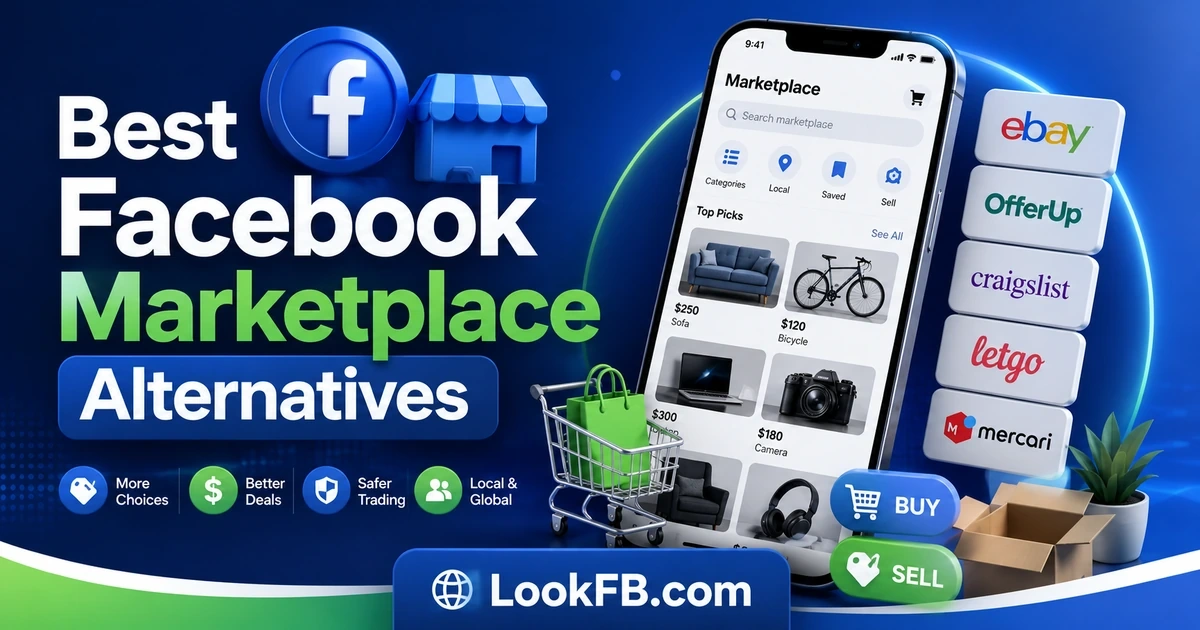
10 Best Alternatives to Facebook Marketplace in 2026
The 10 best Facebook Marketplace alternatives for buying and selling locally — fees, safety, shipping and which platform actually works for what you're selling.
In this article
- Quick comparison
- 1. OfferUp — the closest one-to-one alternative
- 2. Craigslist — still the free-est option
- 3. eBay — for anything you'd ship
- 4. Mercari — casual shipping, cleaner UI
- 5. Nextdoor — hyperlocal, no fees
- 6. Depop — fashion & vintage
- 7. Poshmark — brand-name clothing
- 8. Etsy — handmade & craft only
- 9. Vinted — the free-for-sellers option
- 10. eBay Classifieds (Kleinanzeigen model) — local + low-fee
- Which alternative fits your situation?
- Should you leave Marketplace entirely?
Facebook Marketplace is huge — but it's not always the right fit. Fees on shipping, thin buyer protection, scam-heavy categories and a shrinking listing quality have pushed a lot of sellers to look elsewhere. Here are the 10 real alternatives worth using in 2026, ranked by what they're actually good at.
Quick comparison
| Platform | Best for | Local or shipped | Selling fee | Buyer protection |
|---|---|---|---|---|
| OfferUp | Local pickup | Both | 12.9% shipped, 0% local | Basic (shipped only) |
| Craigslist | Free classifieds | Local | None | None |
| eBay | Collectibles, electronics | Shipped | 13.25% + $0.30 | Strong |
| Mercari | Clothes, small items | Shipped | 10% + payment fee | Strong |
| Nextdoor | Neighborhood pickup | Local | None | None |
| Depop | Fashion, vintage | Shipped | 10% | Strong |
| Poshmark | Clothing, brand-name | Shipped | 20% (over $15) | Strong |
| Etsy | Handmade, craft | Shipped | 6.5% + fees | Strong |
| Vinted | Second-hand fashion | Shipped | 0% seller (buyer pays) | Strong |
| eBay Classifieds | Local, low-fee | Local | Low flat fee | None |
1. OfferUp — the closest one-to-one alternative
OfferUp is what Facebook Marketplace was designed to compete with. Same photo-first layout, same location filter, same buyer-messages-seller flow.
- Fees: 0% on local cash pickups. 12.9% on shipped orders.
- Best for: Furniture, appliances, cars, bikes, baby gear — anything local.
- Downside: User base is smaller than Marketplace in most cities.
2. Craigslist — still the free-est option
Craigslist gets called "old" every year and still ships listings to millions of local buyers. No account needed to browse, no fees for most categories, no algorithm choking your listing.
- Fees: Free (paid categories: cars, dealer listings, some job posts).
- Best for: Large furniture, tools, appliances, free-stuff giveaways.
- Downside: No buyer protection, no messaging inside the app — email/phone only.
3. eBay — for anything you'd ship
If your item can fit in a box, eBay usually gets you more money than Marketplace because the audience is national/international, not just your city.
- Fees: ~13.25% + $0.30 per order.
- Best for: Electronics, collectibles, brand-name goods, sneakers, tech.
- Downside: Steeper learning curve; strong return culture.
4. Mercari — casual shipping, cleaner UI
Mercari sits between eBay and Marketplace. Easier to list than eBay, has proper payment/shipping handling, and the buyer pool is bigger than OfferUp.
- Fees: 10% selling + payment processing.
- Best for: Clothes, small electronics, toys, hobby gear.
- Downside: No local pickup — everything ships.
5. Nextdoor — hyperlocal, no fees
Nextdoor's For Sale & Free section is essentially a neighborhood-verified Marketplace. Because your neighbors know you're local, no-show buyers happen less.
- Fees: None.
- Best for: Kid stuff, moving-out sales, garden equipment, tools.
- Downside: Small audience per neighborhood; slower turnover.
6. Depop — fashion & vintage
If you're selling clothes, thrifted finds or streetwear, Depop's audience will pay a premium that Marketplace won't.
- Fees: 10%.
- Best for: Vintage, streetwear, Y2K, one-of-a-kind fashion.
- Downside: Fashion only — don't list a sofa here.
7. Poshmark — brand-name clothing
Poshmark has a strong culture of "closet parties" and social selling. If you're offloading brand-name clothes, the audience is used to paying full price.
- Fees: $2.95 flat under $15; 20% over.
- Best for: Coach, Michael Kors, Lululemon, Nike, high-street brands.
8. Etsy — handmade & craft only
Etsy isn't a Marketplace alternative if you're offloading household goods — but if you make something, it's the biggest handmade audience in the world.
- Fees: $0.20 listing + 6.5% transaction + payment processing.
- Best for: Handmade jewelry, art prints, digital downloads, custom.
9. Vinted — the free-for-sellers option
Vinted flips the fee model — buyers pay a small protection fee, sellers pay nothing.
- Fees: 0% for sellers.
- Best for: Second-hand clothes and accessories in Europe, growing in the US.
10. eBay Classifieds (Kleinanzeigen model) — local + low-fee
In the US, eBay's local classifieds mode gives you the eBay audience without shipping hassle.
- Fees: Very low flat listing fee, no % commission.
- Best for: Furniture, cars, appliances — anything Marketplace-shaped.
Which alternative fits your situation?
| If you're selling… | Use |
|---|---|
| A couch, fridge, or bike | OfferUp or Craigslist |
| A phone, laptop, or console | eBay (shipped) or Marketplace (local) |
| Clothes | Mercari, Depop or Poshmark |
| Handmade goods | Etsy |
| Anything to your literal neighbors | Nextdoor |
| Free stuff giveaways | Craigslist Free section |
Should you leave Marketplace entirely?
For most people, the answer is no — use both. Facebook Marketplace still has the biggest local audience in most US cities, so keeping it as one of your channels makes sense. But if a listing has been sitting for weeks on Marketplace, it's usually not a pricing problem — it's an audience problem. Cross-post to OfferUp and Craigslist and you'll often move the item in days.
If you're leaving because of Marketplace scams, read our Marketplace safety guide first — many of the same scams hit every platform on this list, so the defenses transfer.
Frequently asked questions
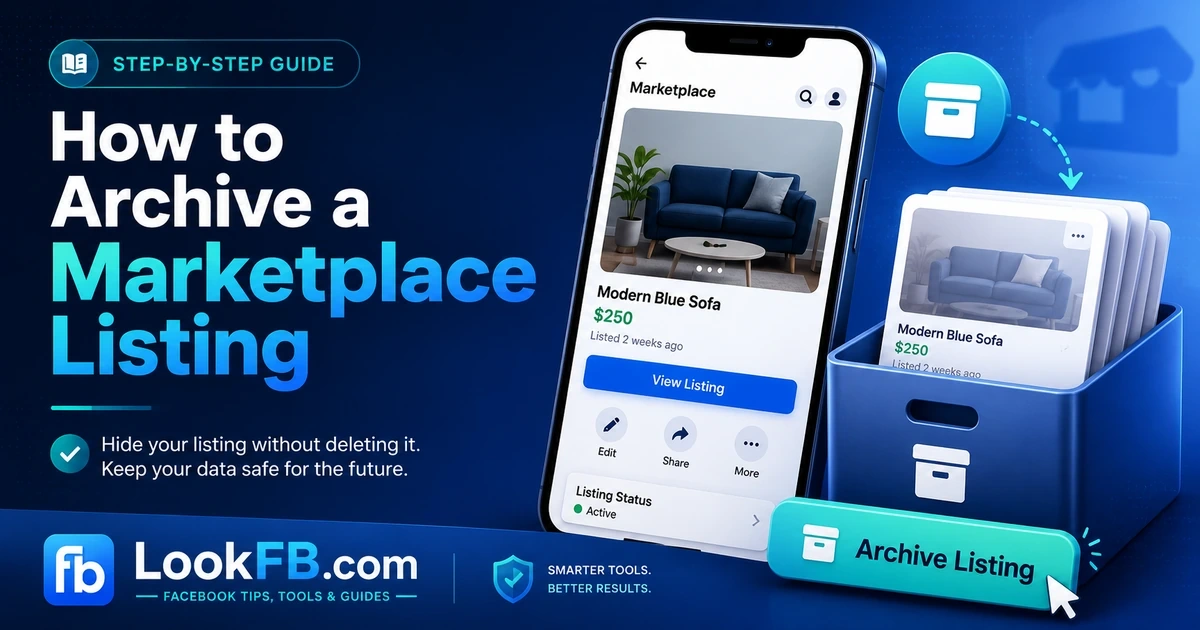
how to archive a facebook marketplace listing
Go to your Facebook Marketplace profile → Your Listings → tap the three-dot menu on the listing → choose Archive. Archived listings stop showing in Marketplace but stay in your history, so you can relist or copy details to another platform later.
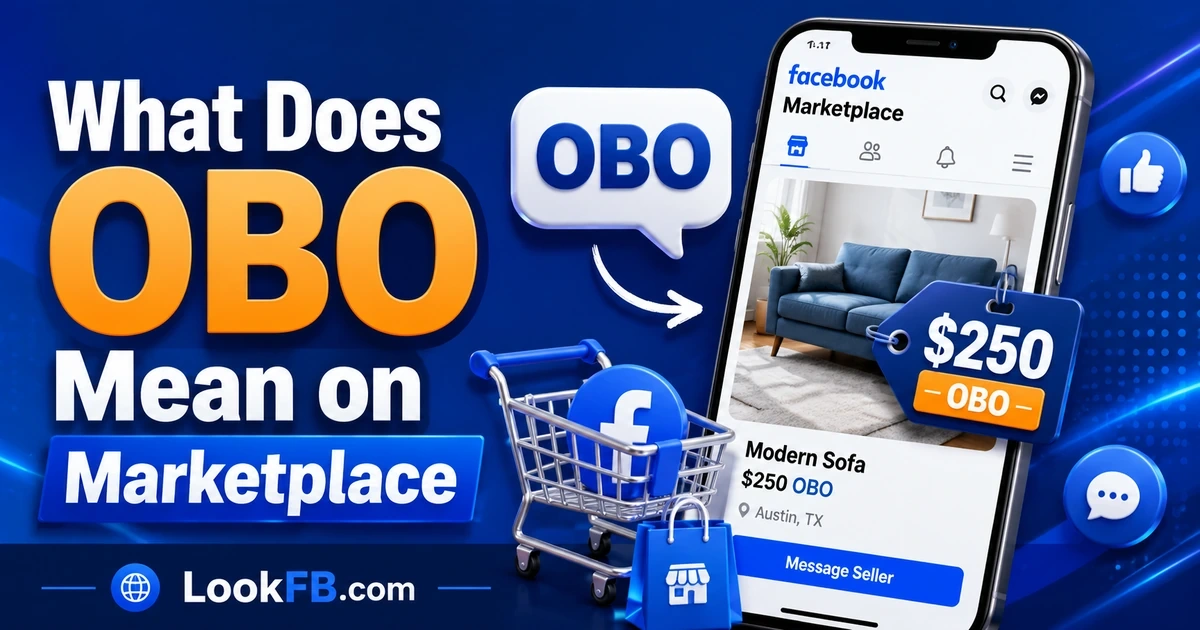
what does obo mean on facebook marketplace
OBO stands for 'or best offer.' The seller has set a price but will consider lower offers. So a $200 OBO couch means the seller wants $200 but will listen if you offer $150.
does facebook marketplace charge fees
Local pickup on Facebook Marketplace is free — 0% fees. Shipping through Marketplace charges a 5% selling fee (minimum $0.40 per item). Facebook Shop sellers pay separate commerce fees. Cash-in-person deals: no fees at all.
how to see hidden information on facebook marketplace
There is no legitimate way to reveal 'hidden' seller info like phone numbers, exact addresses or private profile details. Any tool claiming to unlock them is a scam. Message the seller through Marketplace Messenger — that's the only supported way to reach them.
how do you see hidden information on facebook marketplace
You can't. Facebook deliberately hides sellers' personal details to protect them. Third-party apps claiming to reveal hidden info are scams that either steal your login or harvest your data. Use in-app messaging only.
is venmo safe for facebook marketplace
Venmo is safe between people who know each other, but Venmo's Purchase Protection only covers transactions marked 'Goods & Services.' For strangers on Marketplace, always tag the payment as Goods & Services — a friends-and-family Venmo payment cannot be reversed if you're scammed.
what does pending mean on facebook marketplace
Pending means the seller has accepted an offer from another buyer and is holding the item for them. The listing is not yet sold — if the pending buyer no-shows or backs out, the listing usually returns to Available within a few days.
is zelle safe for facebook marketplace
Zelle is generally not recommended for Marketplace strangers. Zelle offers no purchase protection — once you send money, it's gone. Scammers specifically ask for Zelle because refunds are almost impossible. Use it only with people you personally know.
how to pay on facebook marketplace
For local pickup, cash on collection is safest. For shipped items, use Facebook Checkout or PayPal Goods & Services — both offer buyer protection. Avoid Zelle, Cash App friends-and-family, gift cards, and wire transfers with strangers.
how to ship on facebook marketplace
Enable shipping when creating your listing — tap Shipping and set a price or choose Facebook's calculated rates. Buyers pay through Facebook Checkout. You'll receive a prepaid shipping label to print, and Facebook releases your payment after the buyer confirms delivery.
Written by James Okafor, Social Commerce & Community Strategist